Modern luxury is defined by high environmental stewardship. Maintaining thousands of square feet of vibrant landscaping requires intelligent water systems that align with local water cycles. It is entirely possible to enjoy a lush, evergreen lawn while reducing your water footprint by up to 45%.
Here are the key systems driving modern ecological premium landscaping today.
1. The Power of Soil Moisture Sensors
Traditional automated timers run regardless of whether it rained the night before. Smart sensors change everything:
- TDR (Time Domain Reflectometry) Probes: Placed at root depths (3 inches and 6 inches), they measure the dielectric constant of the soil.
- Automatic Evapotranspiration (ET) Adjustments: If soil moisture is optimal, the irrigation controller automatically skips the cycle, protecting the root from rot and conserving municipal or tube-well water.
2. Drip Irrigation vs. Low-Trajectory Sprinklers
How water is delivered determines the evaporation loss:
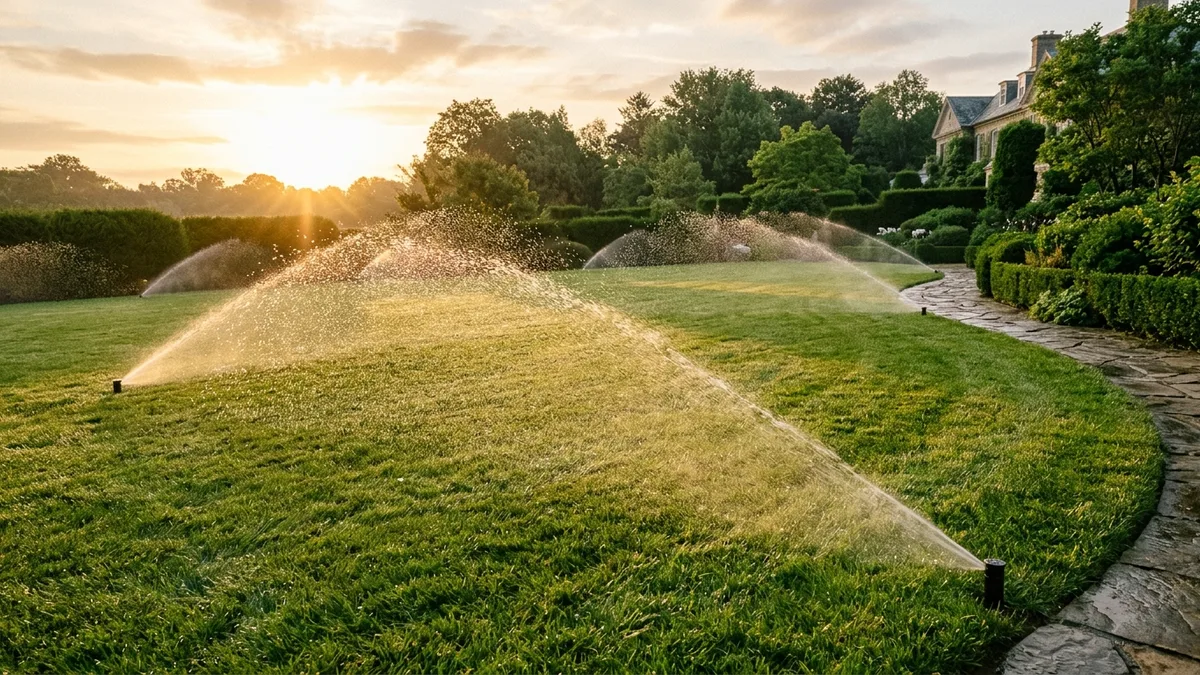
- Low-Trajectory Nozzles: Standard pop-ups throw fine mists high in the air, losing up to 30% to high winds and heat evaporation before hitting the grass blade. Low-angle rotary nozzles throw larger water drops in tight, sweeping streams close to the earth.
- Sub-Surface Drip (SSD): For boundary hedge borders, flower beds, and architectural turf ribbons, sub-surface drip tubes deliver water directly to root tissue, cutting evaporation losses to virtually zero.
3. Early Morning Cycles Rule
Watering your lawn in the afternoon heat is highly inefficient as water evaporates quickly. Watering deep at night, conversely, leaves water standing on the leaf blade too long, initiating fungal rot.
- The Sweet Window: Schedule irrigation to start between 4:00 AM and 7:00 AM. Warm morning winds will gently dry the grass blades quickly, while the roots have fully absorbed the moisture prior to peak summer sunshine.